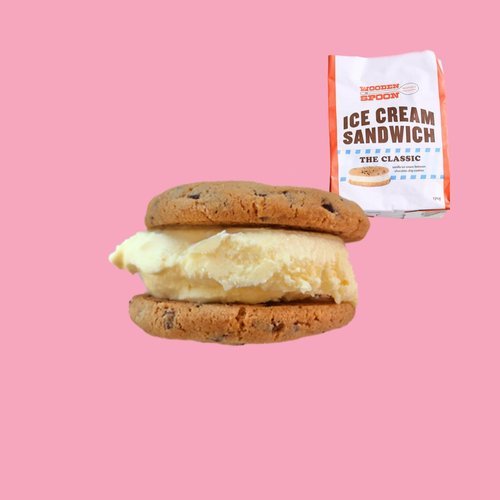
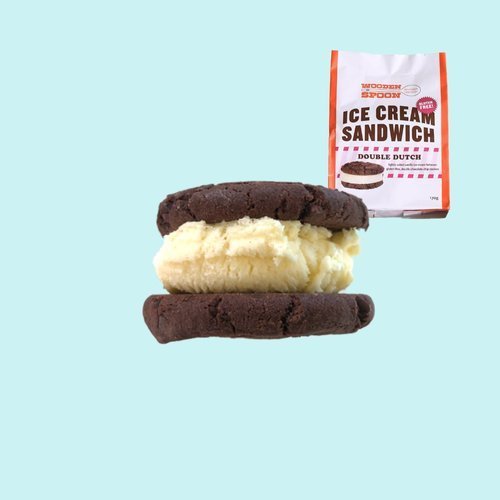
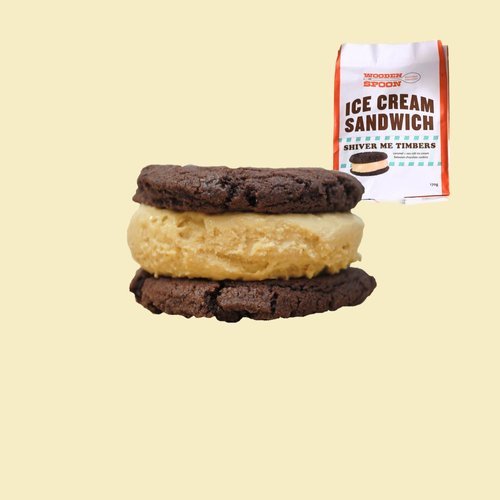
Allergens are shown in bold. Always check the label on your tub.
How we build a sandwich
A good ice cream sandwich needs a cookie that stays soft enough to bite when frozen. We pair each cookie with an ice cream that suits it: real vanilla bean against chocolate chip, salted vanilla with a gluten-free double chocolate cookie, and caramel and sea salt with a dark chocolate cookie. Then we fill, press and freeze them so the layers hold together.
Sandwiches from years past
Our first sandwiches, back in 2015, included Brown Sugar Bomb (brown sugar ice cream between two Anzac biscuits), The Happy Snappy (lemon ice cream with gingersnaps), PBC (chocolate ice cream with egg-free peanut butter cookies) and Sweet Strawberry. They are not in the freezer now, but they shaped the ones that are.
Serving tips
Rest the sandwich at room temperature for about five minutes before eating.
Cut in half with a warm knife for kids or for sharing.
Roll the edges in sprinkles, chopped nuts or crushed hokey pokey for a party platter (check allergies first).
Double Dutch is made with gluten-free double chocolate chip cookies, so it is our gluten-free sandwich. The Classic and Shiver Me Timbers use wheat flour. All three cookies contain egg. Our kitchen also handles gluten, so check the label if you have coeliac disease.
How do I stop an ice cream sandwich from going hard in the freezer?
Keep it sealed in its bag or wrapped tightly, at -18°C or colder, at the back of the freezer rather than in the door. Take it out five minutes before eating so the cookie softens slightly and the ice cream is easy to bite.
Can I make my own ice cream sandwiches at home?
Yes. Bake thin, slightly soft cookies, freeze them flat, then press in a layer of softened ice cream and freeze again until firm. Our step-by-step guide to making ice cream sandwiches at home covers sizes, timings and fillings.